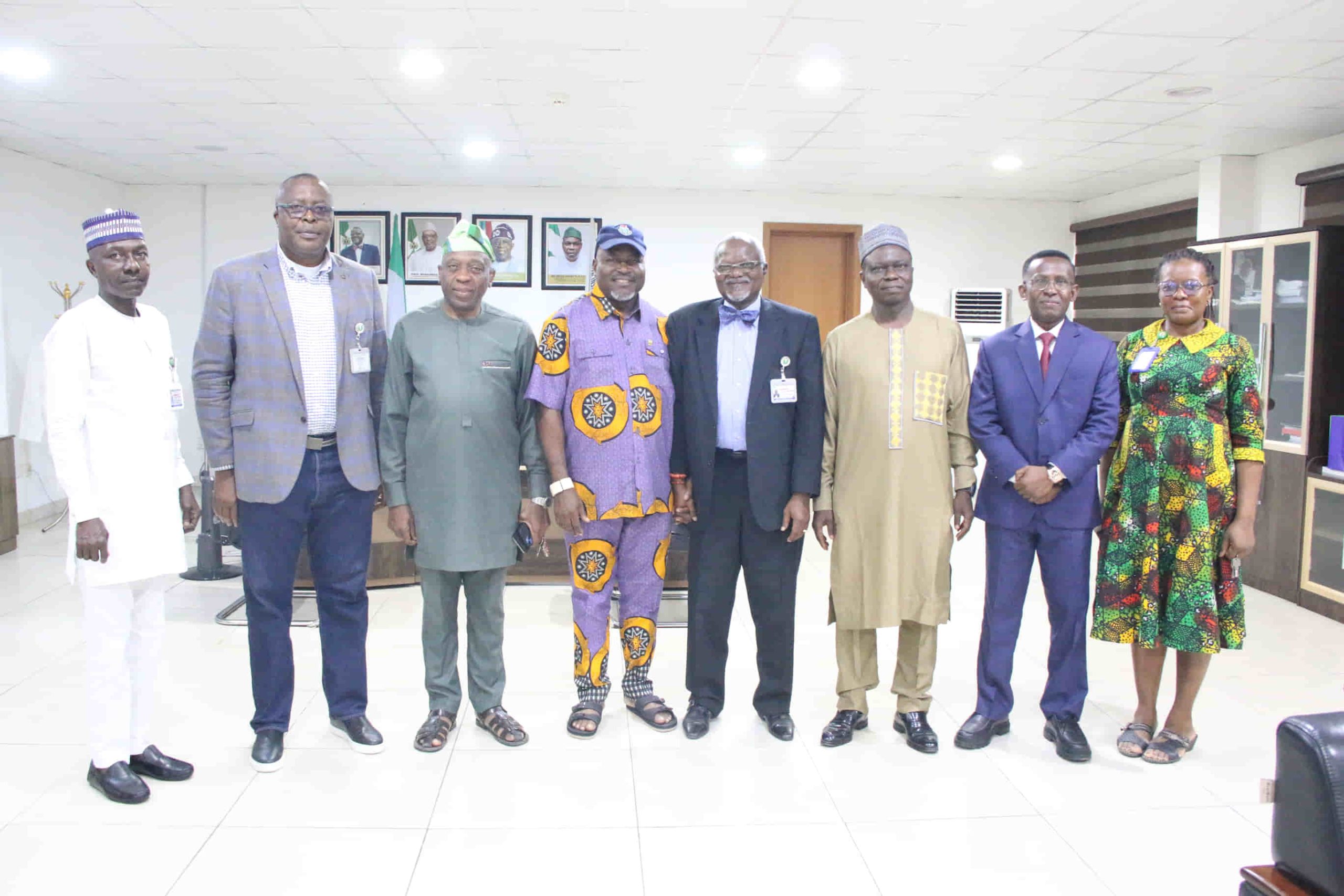
The Association of Provosts of Colleges of Medicine (APCOM) has called for deeper collaboration between Nigeria’s medical schools and the Nigerian Institute of Medical Research (NIMR) to strengthen research output, training, and health innovation in the country.
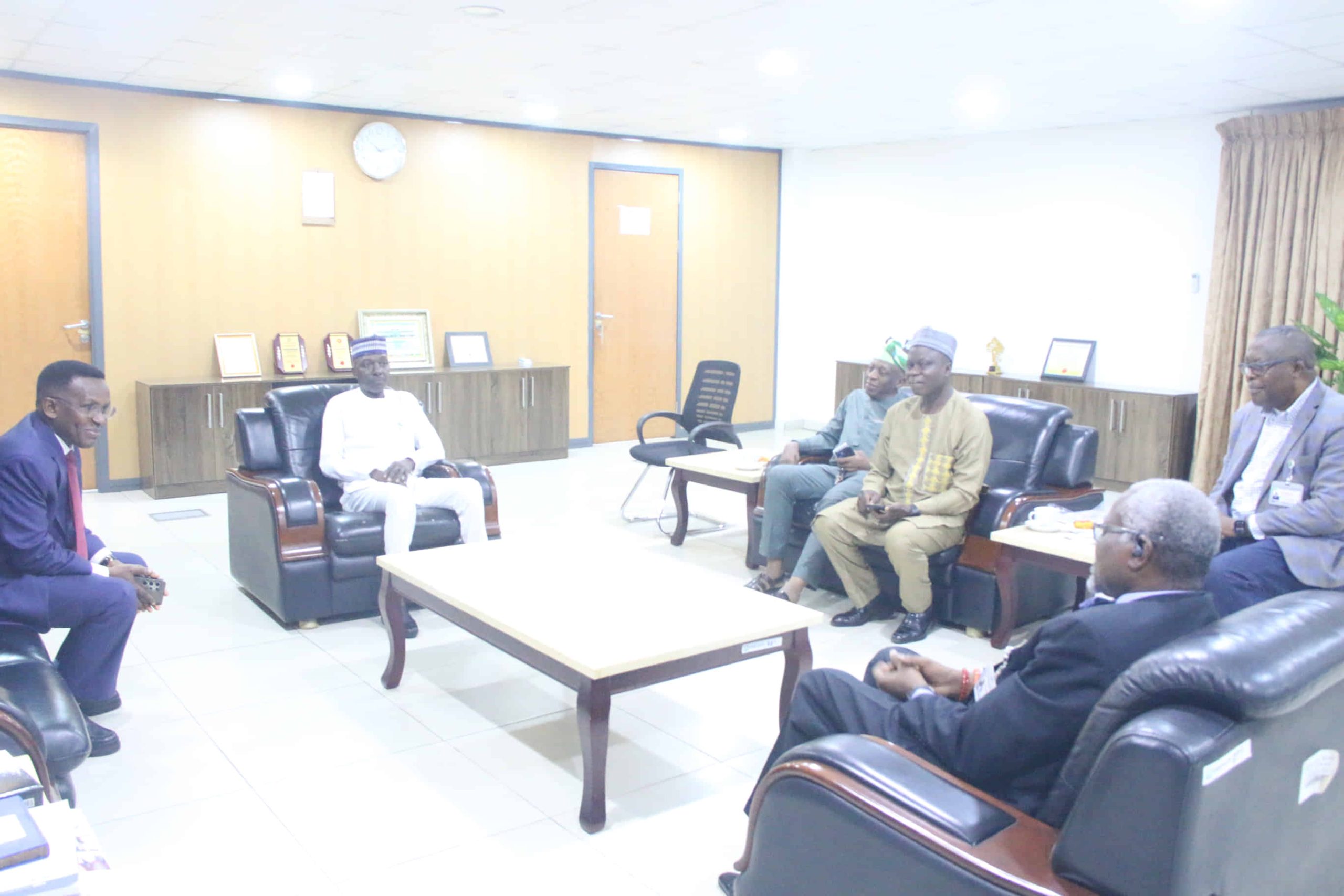
The call was made on December 5, 2025, when an APCOM delegation paid a courtesy visit to the Director-General and Chief Executive Officer of NIMR, Prof. John Oladapo Obafunwa, at the Institute in Lagos.
The delegation was led by APCOM Chairman, Prof. Alabi, and included Prof. Ademola Oremosu of the University of Lagos, Prof. Titus Ibekwe of the University of Abuja, and Prof. Olufemi Idowu of the Lagos State University College of Medicine.
Addressing the DG, Prof. Alabi disclosed that the Federal Government has commenced a major intervention to rehabilitate Nigeria’s medical schools following sustained advocacy by APCOM over the years.
According to him, the Federal Ministry of Education has approved the rehabilitation of 18 medical schools nationwide—three in each geopolitical zone—comprising two federal and one state-owned institution per zone.
“Each of the selected medical schools will receive ₦4 billion for rehabilitation, with an additional ₦1.5 billion earmarked for hostel accommodation,” Prof. Alabi said, adding that the intervention represents a total federal investment of about ₦104 billion in the current phase.
He explained that, in the South-West, the University of Lagos, the University of Ibadan and Ondo State University of Medical Sciences were selected, while other beneficiary institutions cut across all six geopolitical zones.
Prof. Alabi further revealed that the Minister of Education, Dr. Tunji Alausa, had secured waivers to fast-track procurement processes and ease implementation pressures on university managements.
He said the overarching goal of the intervention is to double admission quotas in Medicine, Dentistry, Pharmacy and Nursing, as part of efforts to address Nigeria’s worsening medical brain drain, popularly referred to as the “Japa syndrome.”
“If a medical school currently admits 75 students, the intervention is designed to scale it up to 150,” he noted.
Beyond infrastructure, the APCOM Chairman urged NIMR to deliberately engage medical schools in research grants, capacity building, hands-on training, internships, observerships and sabbatical opportunities.
“NIMR is Nigeria’s foremost medical research institute. It is only natural that medical schools and their experts are fully integrated into its research ecosystem,” he said.
Other members of the delegation echoed the call, stressing that closer collaboration would reduce duplication of facilities, promote clinical trials tailored to Nigeria’s genetic and environmental realities, and curb the practice of seeking research infrastructure abroad.

Responding, Prof. Obafunwa welcomed the delegation and affirmed NIMR’s statutory mandate to collaborate with institutions within and outside Nigeria.
He disclosed that about ₦520 million was appropriated for research in NIMR’s 2025 budget but acknowledged that bureaucratic bottlenecks, Treasury Single Account (TSA) regulations and delayed capital releases continue to constrain effective research funding and grant disbursement.
“I am not interested in esoteric research. I am interested in research that directly impacts the common man,” Prof. Obafunwa said, stressing the need for pragmatic, problem-solving studies.
He explained that NIMR is exploring collaborative research models that formally integrate external researchers with in-house scientists to ensure accountability and ease of fund management under existing financial regulations.
Prof. Obafunwa also disclosed that recent approvals now allow NIMR to operate commercial bank accounts for foreign donor funds, though federal allocations remain subject to TSA controls.
Despite the challenges, he assured APCOM of NIMR’s readiness to strengthen partnerships with medical schools in research, training and knowledge exchange, adding that sustained advocacy would be required to reform Nigeria’s research funding framework.
The visit ended with mutual commitments to deepen engagement between NIMR and colleges of medicine, in line with national goals to strengthen health research, education and service delivery.