


A delegation from Expertise France, implementing an European Union (EU)–supported pharmaceutical manufacturing initiative, has expressed strong interest in designating NIMR as a regional coordinating hub for Nigeria and Africa under the Qualimedsmafplus (Kalima) Project.
The delegation visited NIMR on December 5 as part of the project’s inception phase to explore collaboration in research and development, regulatory strengthening, local pharmaceutical production, quality assurance, and human capacity development, with a focus on achieving tangible results within a four-year project cycle.
Speaking during the meeting, Mr. Demba Omar, the DIAK Team Lead explained that the EU initiative is designed to support local manufacturing of medicines across Africa, with Nigeria identified as one of the strategic hubs alongside Senegal (Dakar), Ghana, Rwanda, and South Africa.
“We are at the inception phase of the project, and it was very important for us to come and see NIMR, discuss directly with you, and understand what role the Institute can play in strengthening pharmaceutical production and research in Nigeria,” he said.
The delegation outlined that the project has been structured around four interconnected pillars:
- Research and Development, with NIMR and the National Institute for Pharmaceutical Research and Development (NIPRD) as key partners;
- Regulatory Strengthening, led by the National Agency for Food and Drug Administration and Control (NAFDAC);
- Engagement with Private Sector Manufacturers, in collaboration with the Presidential Initiative on Vaccine Production (PIVAC), to support local pharmaceutical production aligned with national health needs;
- National and Regional Collaboration, positioning Nigeria as a regional hub to support cooperation across EU-supported African countries.
The team noted that the project, funded with €10 million over four years, is deliberately focused on quick, practical wins that directly strengthen institutions and support the pharmaceutical value chain, rather than long-term theoretical outcomes.
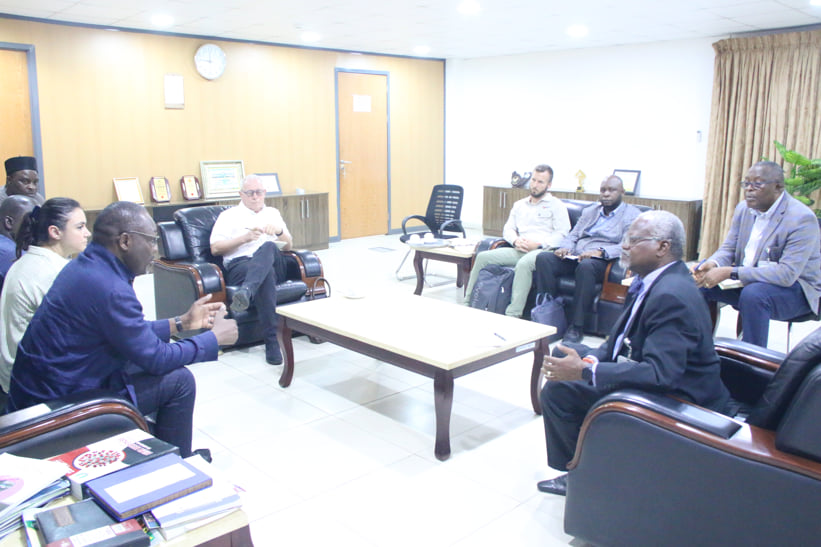
Members of the delegation — including experts in biological sciences, immunology, quality assurance, regulatory affairs, and pharmaceutical manufacturing — identified NIMR as a critical partner, particularly in bioequivalence and bioavailability studies, stability and shelf-life studies, quality control, toxicology, and clinical trials.
They emphasized that independent research institutions like NIMR are essential in supporting manufacturers who may lack the resources to conduct such studies internally.
“NIMR, as a research institution, can play a very important role as a service provider to the pharmaceutical industry, especially in areas like bioequivalence, stability testing, and quality assurance,” one of the experts noted.
Responding, the NIMR DG, Professor John Oladapo Obafunwa, welcomed the delegation and affirmed the Institute’s readiness to play a leadership role, particularly within its core mandate of medical research and development.
“Collaboration and networking are the way to go. We are particularly interested in ensuring that medicines are produced locally and that what is produced meets the highest quality standards,” Prof. Obafunwa said.
He highlighted NIMR’s longstanding experience in drug evaluation, clinical trials, bio-pharmacology, toxicology studies, and vaccine research, noting that the Institute has previously conducted antimalarial drug evaluations and played an active role in COVID-19 clinical research in collaboration with NAFDAC.
Prof. Obafunwa also underscored NIMR’s capacity to support regulatory requirements, explaining that under Nigerian law, locally manufactured medicines must undergo clinical evaluation within the country before registration — a role NIMR is well positioned to fulfil.
“NIMR has the clinicians, pharmacists, scientists, facilities, and population base needed to support these studies. What we require is targeted support to expand capacity, accreditation, equipment, and training,” he said.
Vaccine Research and Lassa Fever Identified as Opportunities
Discussions also explored vaccine research and development, with Prof. Obafunwa disclosing ongoing efforts to establish a dedicated vaccine research and production centre at NIMR. He identified Lassa fever as a potential area where Nigeria could provide regional leadership under the project.
“If we have partners that can support vaccine development, including for Lassa fever, we will be very happy. We are already investing in vaccine research capacity and human resource development,” he noted.
Respect for Institutional Mandates
Both parties emphasized the importance of collaboration without mandate overlap, clarifying that while NIMR would lead on research and clinical studies, regulatory oversight remains the responsibility of NAFDAC, with NIPRD and other institutions playing complementary roles across the pharmaceutical development pipeline.
The meeting concluded with agreement on:
- The designation of technical focal persons from NIMR to work with the Expertise France team;
- A technical follow-up visit to assess laboratories, facilities, and capacity gaps;
- The establishment of a strategic coordination committee, comprising senior representatives from NIMR, NAFDAC, PIVAC, the European Union, Expertise France, and UNICEF, to meet twice yearly;
- Continued engagement aimed at positioning NIMR as a regional coordinating centre for pharmaceutical research, quality assurance, and capacity building in Africa.
The delegation expressed appreciation for NIMR’s openness and commitment, noting that the Institute’s role would be central to ensuring quality, credibility, and sustainability of pharmaceutical manufacturing in Nigeria and the wider region.