MTG Project Study Confirms Reliability of Malaria Rapid Tests
… Researcher urges better training and public awareness
A new study conducted under the Mind the Gap (MTG) Project by researchers at the Nigerian Institute of Medical Research (NIMR) has confirmed that malaria rapid diagnostic tests (RDTs) used in primary health centres (PHCs) across Epe Local Government Area are largely reliable. However, the research also identified key gaps in their application and in community health-seeking behaviours.
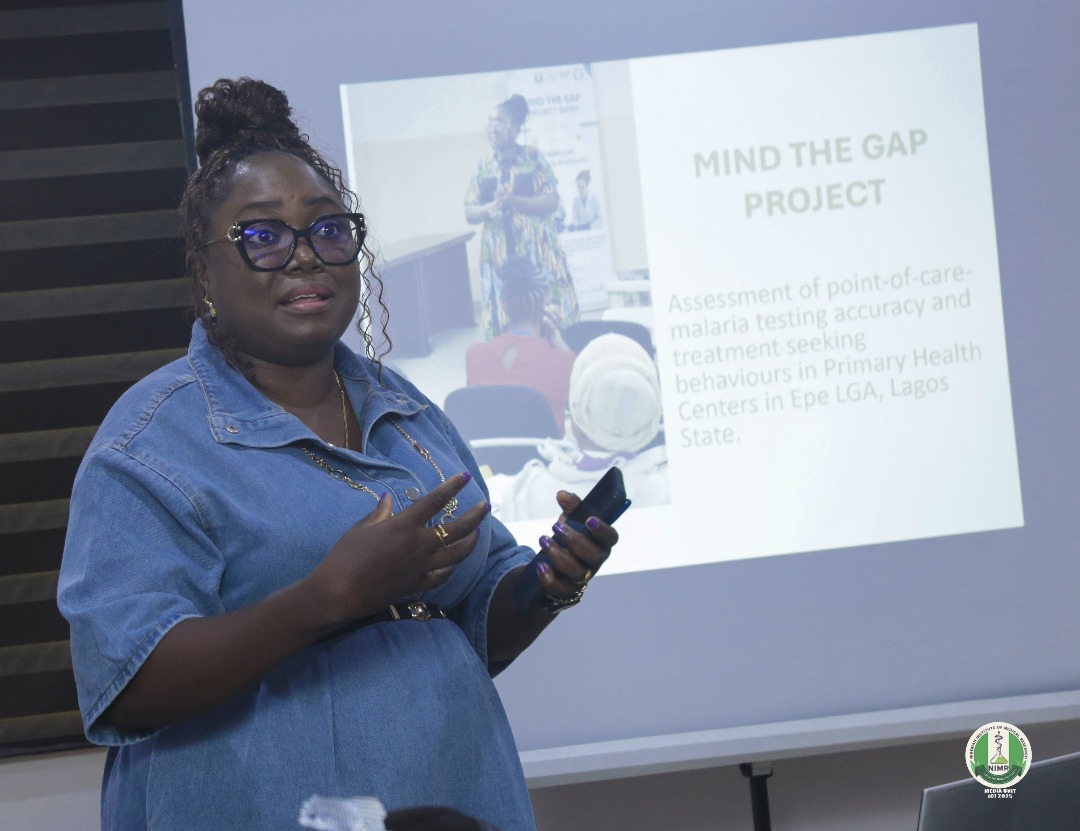
The study, titled Assessment of Point-of-Care Malaria Testing Accuracy and Treatment-Seeking Behaviours in Primary Health Centres in Epe LGA, was carried out by Dr. Tolulope Akinkunmi, a NIMR Research Fellow and MTG Project Fellow. It assessed how accurately RDTs detect malaria and examined how residents respond when they experience malaria-like symptoms.
Presenting the findings at NIMR, Dr. Akinkunmi disclosed that the RDTs demonstrated a sensitivity of 92.5% and a specificity of 88.5% when compared with microscopy—the gold standard for malaria diagnosis. These results, she said, indicate that the tests are dependable for routine malaria screening in PHCs.
Despite the strong performance, the study identified several operational challenges that could affect test accuracy, including inconsistent storage conditions, limited refresher training, and reporting lapses. Many health workers, she added, emphasized the need for regular supervision and updated guidelines to sustain testing reliability.
On the community side, Dr. Akinkunmi reported that treatment-seeking behaviour remains suboptimal. While 54.2% of respondents showed fair knowledge of malaria symptoms and management, 44.6% demonstrated poor knowledge, with many resorting to self-medication or delaying visits to health centres. Only a small proportion sought medical attention promptly when fever symptoms appeared.
The researcher also highlighted factors that support malaria testing at the primary health level, notably the availability of free RDTs and the trust communities have in PHC health workers.
“The significance of my findings lies in the almost perfect agreement between RDTs and expert microscopy,” Dr. Akinkunmi explained. “Using kappa statistics—a measure that shows the alignment between two different tests—I obtained a kappa value of 0.998, which reflects an almost perfect correlation.”
According to her, the findings provide baseline data for Lagos State’s Malaria Control Programme and offer insight into community behaviours that influence malaria elimination goals. They also emphasize the need to build capacity among PHC staff who perform RDTs.
Dr. Akinkunmi recommended stronger quality control and supervision for RDT use, regular refresher training for PHC personnel, and intensified socialand behaviour change communication (SBCC) to encourage early treatment-seeking. She also called for further community-based studies to understand barriers among residents who do not visit PHCs.
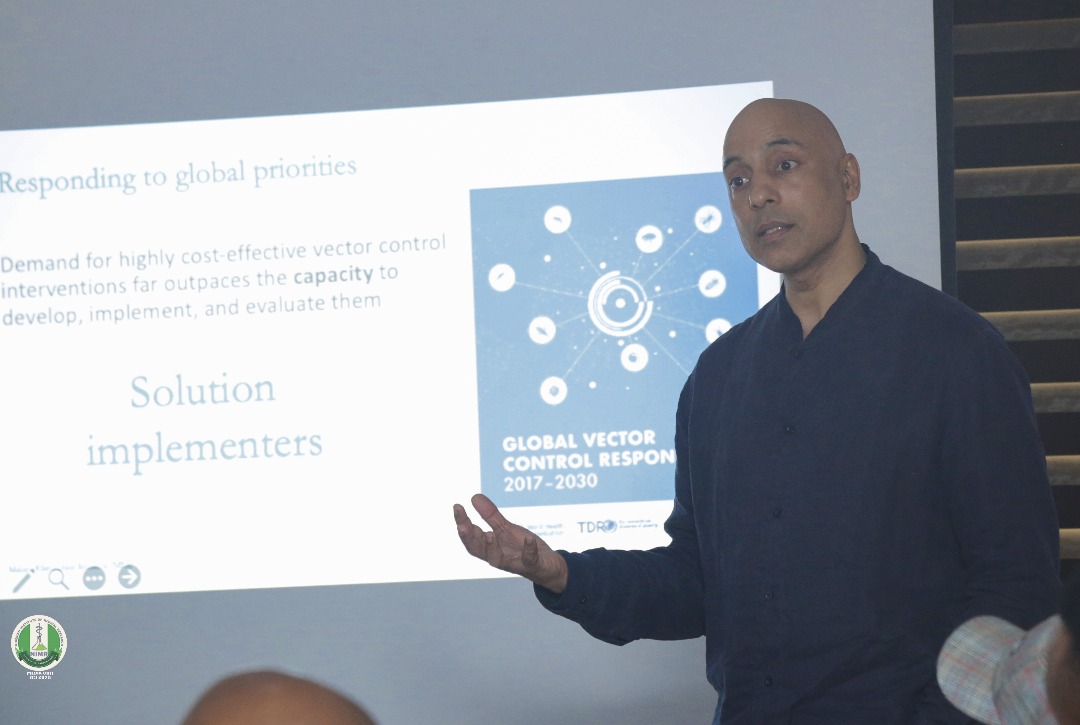
Providing context on the broader MTG initiative, Prof. Neil Lobo, a Research Professor at the University of Notre Dame, Indiana, USA, explained that the Mind the Gap Project is designed to help countries evaluate malaria interventions and adapt them to local realities for maximum impact.
“We are developing a system that allows countries to understand how interventions work in their specific settings and adapt them to achieve the best possible results,” Prof. Lobo said. “Given limited resources, it’s vital to use every available tool efficiently.”
He noted that the MTG initiative operates through four workstreams and includes fellows based in Nigeria who support its implementation.
“We currently have two fellows in Nigeria,” he added. “I’m here to provide whatever support is needed to ensure the project’s success.”
The NIMR-led study on point-of-care malaria testing in Lagos is one of several projects under the MTG framework aimed at bridging the gap between research evidence and practical health interventions in malaria control. By integrating data, behaviour, and health system capacity, experts believe that initiatives like MTG could help Nigeria transition from one-size-fits-all solutions to smarter, evidence-driven strategies tailored to local conditions.
As Lagos State intensifies its efforts toward malaria elimination, the findings highlight the need to close the gap between accurate diagnosis, timely treatment, and public awareness — a step that could significantly reduce malaria-related illness and deaths.
In his remarks, NIMR Director-General, Prof. Oladapo Obafunwa, thanked Prof. Lobo for taking time out of his busy schedule to visit the institute for the presentation.
“I’m particularly delighted to witness this occasion and to see one of our colleagues, an MTG Fellow, make this important presentation,” he said. “I’ve followed her progress closely and am proud of the quality of work being done.”
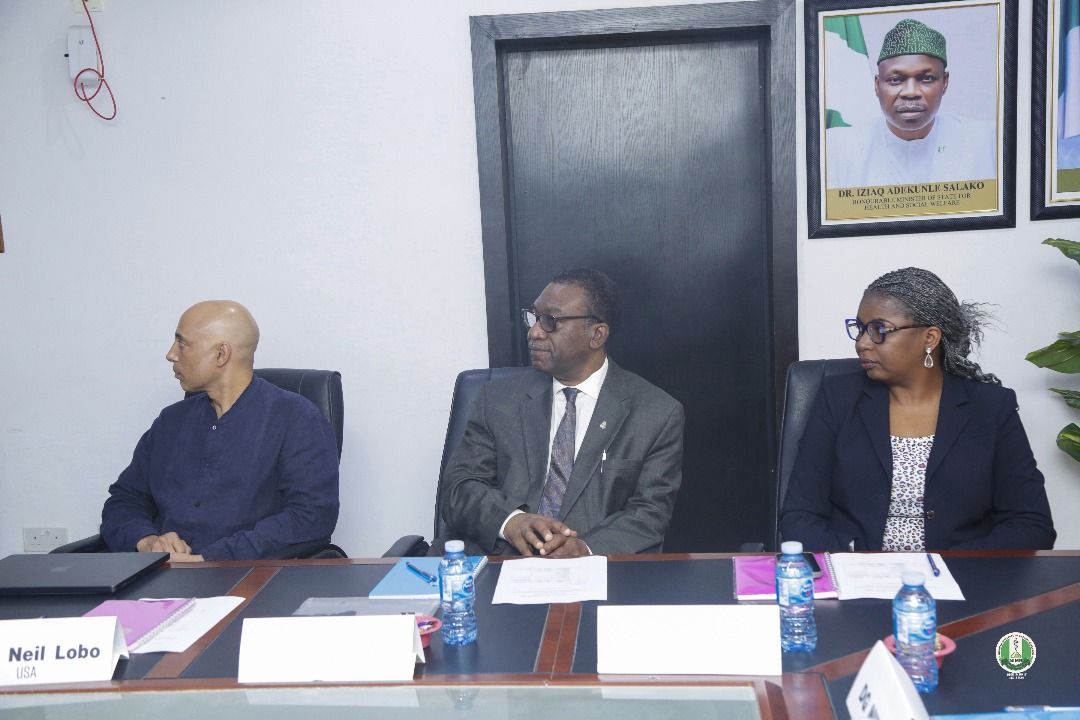
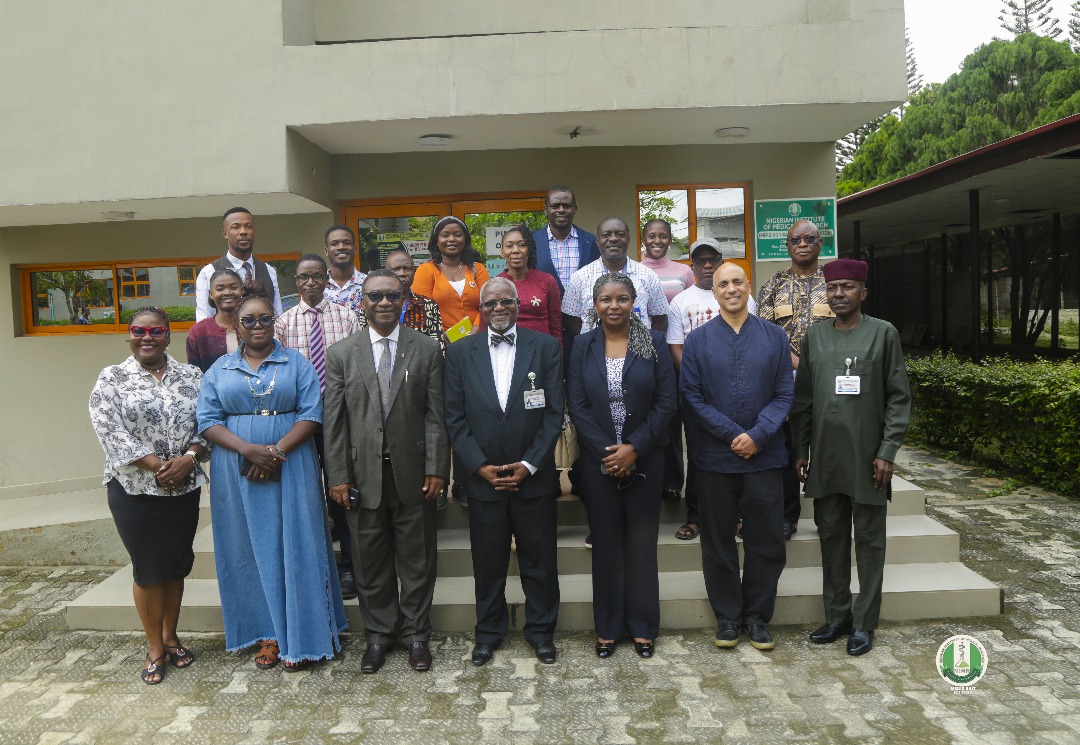
The event was attended by Lagos State Commissioner for Health, Prof. Akin Abayomi, represented by the Director of Disease Control, Dr. Victoria Egunjobi; Past Chairman, Lagos State Primary Health Care Board, and former CMD, Lagos University Teaching Hospital, Prof. Akin Oshibogun; Director of Medical Services and Disease Control, Dr. Veronica Iwayemi; Medical Officers of Health for Epe and Agege LGAs, Drs. Awolesi and Ayegbusi; NIMR Head of Administration, Mr. Bitrus Nelson; WHO-certified microscopist, Mr. Sam Akindele; and the research assistants who conducted the field work.